Interface record
Vehicle platform, bearing envelope and flange interfaces. Evidence status: confirm with application drawing.
Interface first / Evidence next
Define geometry, load and operating conditions before selecting a bearing or preparing a validation plan.
Review engineering scope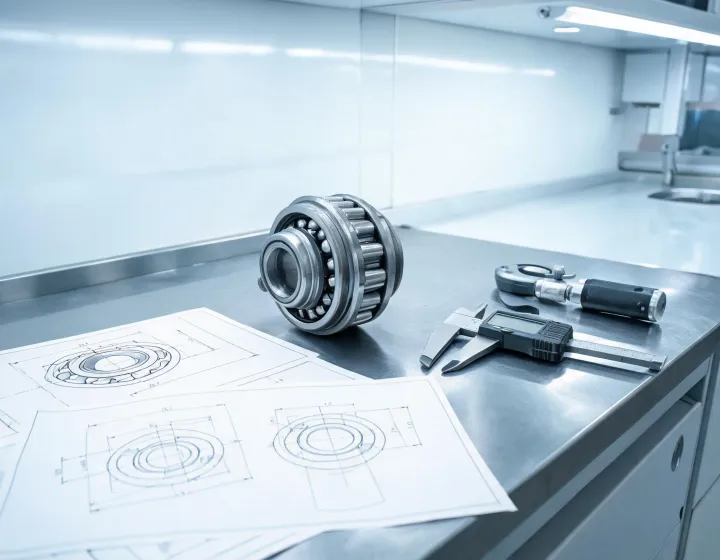
Vehicle platform, bearing envelope and flange interfaces. Evidence status: confirm with application drawing.
Loads, speed, sealing and duty cycle are defined for the particular application. Evidence status: review required.
Applicable standards depend on product, market and documented scope. Evidence status: request documentation.
Product families
Review bore, outside diameter, width and load direction against the application.
Consider flange geometry, mounting interfaces and sensor integration together.
Identify seals and associated hardware required for the specific repair procedure.
Evaluate contamination exposure and seal lip conditions within the duty profile.
Technical review
Review the mating surfaces, bearing arrangement and installation method before a preload target is agreed. A dimensional match alone does not establish suitability under operating loads.
Check the seal environment, ABS encoder orientation and wheel-speed sensor clearance in the context of the assembly. Installation instructions should follow the vehicle and component documentation.
Evidence, not assumptions
IATF 16949 / ISO 9001 — management-system references; certificate scope must be verified for the relevant site.
Product validation — test method, sample, duty and acceptance criteria are specific to the program.
Traceability — request the records and identification required for the intended supply arrangement.
Applications
Consider compact packaging, noise and sensor interfaces.
Review axle loads, duty cycles and maintenance intervals.
Describe contamination, speed and intermittent loading.
Document center
Fitment · Specifications · Quality · Installation
Send your platform, dimensions and validation requirements for a structured discussion.